
Pavel Zálešák: Stop Killing Games Is Not Just a Gaming Issue
8 min. | 16. 7. 2026
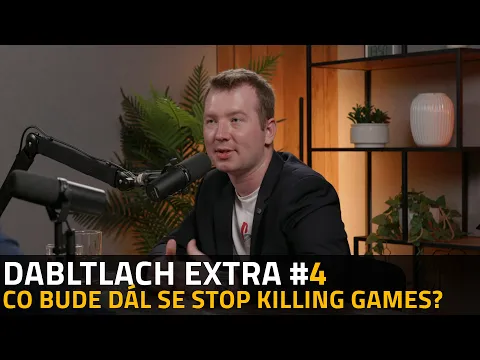
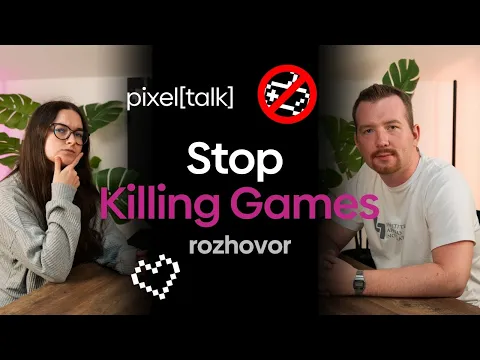
Software Development student Pavel Zálešák has joined the Stop Killing Games initiative, which raises broader questions about digital ownership, players’ rights, and the future of video games. In this interview, he explains why games are more than entertainment, how AI is changing game development, and why digital content should not disappear simply because of business models.
How did the idea of getting involved in the Stop Killing Games initiative come about? Was there a specific moment when you realized that this was not just a gaming issue, but a broader question of digital rights?
I learned about the initiative thanks to a mention in a video by Roth Welden. The topic resonated with me so much that I decided to get actively involved and contacted the head of the initiative. Gradually, I realized that this issue goes beyond just server-dependent games. The real understanding of the depth of the problem came at the end of the signature collection, when I realized that we were fighting for a fairer setup of digital licences and for a change in the way gaming companies approach consumers.
You study Software Development at Unicorn University. Did you use anything from your studies while working on the initiative — for example, a way of thinking about software, an analytical approach, or working with technologies?
From my studies, I mainly took away, among other things, knowledge of communication between server and client and overall architecture. At the same time, thanks to following my study plan, I had more time for the activities connected with the SKG movement.
Stop Killing Games connects technology, legislation, communication, and community work. What was the most challenging part for you, and what did you learn from it?
The most challenging part was learning how to communicate the issue correctly to all age groups and also outside the IT environment. From politicians and friends to developers themselves. It is important to present the idea properly in different ways.
Artificial intelligence is significantly changing software development and the work of developers today. How do you see its role — more as a tool that helps, or as something that needs to be used carefully?
I think it can make routine tasks much easier. But a person with critical thinking should still be at the forefront, someone who does not get carried away by automation bias and fall for AI hallucinations. Video games are a form of art, so AI should definitely not replace the visual side of things, such as concept art, textures, models, or world builders. On the other hand, it could be used well for developing game mechanics or optimizing games, especially those in Unreal Engine 5 .
Many students have their own projects or ideas during their studies, but they do not always dare to take them further. What do you think determines whether an idea becomes something real?
Critics of similar proposals point to technical, legal, and economic limits — such as server operation, licensed content, or security. Where do you think a realistic compromise lies between users’ rights and the possibilities of developers or publishers?
Technical and economic limits are often more a question of priorities than a real obstacle. I see the compromise in the fact that if a publisher no longer wants to actively support a game, it must not “kill” it at the same time. There are proven solutions that do not require enormous costs: either releasing a final offline patch that removes server dependencies, such as microtransactions or voice chats, or releasing server tools to the community. In that case, players keep the same client and simply connect to servers run by the community.
As for licensing, there is no reason why these legal obstacles should make playing impossible. The customer is not buying the right to distribute the content, but the right to access the content they paid for. So we have the technical solutions; what is missing is the willingness of publishers to admit that their product has a value other than financial value after the end of its commercial cycle.
The Stop Killing Games initiative has also reached European media and public debate. What has surprised you the most on that journey so far?
The topic of digital ownership is currently being discussed mainly in relation to games, but it will probably also concern other digital services. Where do you think the line lies between a company’s right to discontinue a product and a user’s right to continue using something they have paid for?
The line should be clear: if a company stops supporting a product, it must not prevent the user from continuing to use it. This is about more than money; it is about our digital heritage. Games are a modern form of art, and today we are witnessing a second burning of the Library of Alexandria. We are losing thousands of hours of developers’ effort, passion, and creativity, which are literally being erased from history.
So I ask: what will we show our children one day? Should it be only non-functional files on a disk? As a society, we should not allow digital history to be erased simply because of short-sighted business models.
What would you recommend to students who have their own project or initiative but are hesitant about whether it makes sense to pursue it?
Listen to more
Are you interested in Software Development and it's future?
Apply to our Bachelor’s programme in Software Development, which will prepare you to become a highly sought-after professional with broad career opportunities in the development of modern applications and systems. You will learn how to design, develop, and manage software, work with data and cloud technologies, and use artificial intelligence as a powerful tool in development using the latest technologies.
